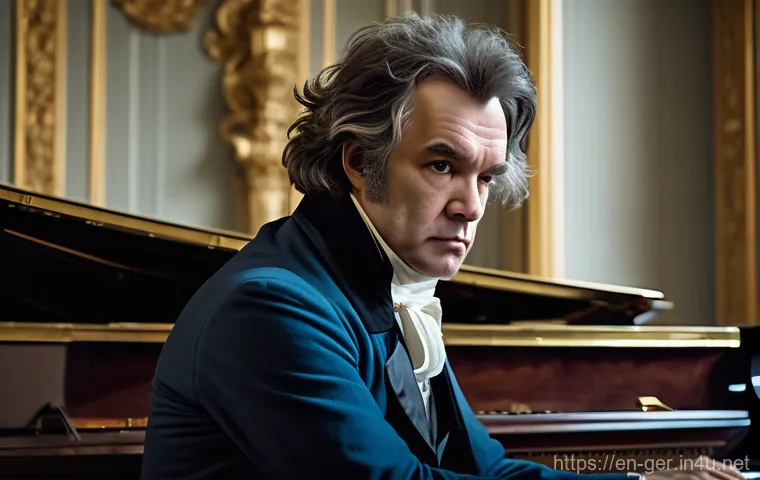
Hey everyone! Have you ever had a piece of music hit you so hard it felt like it reached right into your soul and spoke directly to you? For me, that’s the absolute magic of Ludwig van Beethoven.
Every time I immerse myself in his incredible compositions, it’s not just about listening to notes on a page; it’s an experience, a profound journey through the full spectrum of human emotion – from deep struggle to breathtaking triumph.
Honestly, it’s mind-blowing to think about how one individual, facing such immense personal challenges, could create sounds that still resonate with such incredible power hundreds of years later.
His musical innovations weren’t just revolutionary for his era; they literally laid the foundation for countless musical genres that followed and continue to inspire artists, filmmakers, and even game developers today.
It just goes to show that true genius, like Beethoven’s, is absolutely timeless. Curious to explore the extraordinary life and musical legacy of the man who truly redefined what music could be?
Let’s delve into his astounding achievements and uncover what makes them so eternally impactful.
The Unstoppable Spirit: How Beethoven Battled Adversity and Won
It’s almost impossible to talk about Beethoven without talking about his struggles, especially his devastating hearing loss. Honestly, when I think about it, it sends shivers down my spine. Imagine being a musician, a composer, whose entire world revolves around sound, and slowly, irrevocably, that world starts to fade into silence. It’s a nightmare scenario, right? Yet, this wasn’t the end for Beethoven; it was, in many ways, the crucible that forged his most profound and emotionally charged works. I’ve often wondered, sitting there, listening to the sheer power of his later symphonies, how much of that raw, visceral emotion stemmed from his internal battle. It wasn’t just a physical ailment; it was a psychological torment that he channeled directly into his art. He didn’t just compose; he wrestled with his destiny, and every note feels like a testament to that incredible fight. He pushed through despair, loneliness, and frustration, proving that the human spirit can truly triumph over unimaginable odds, leaving us with a legacy that transcends mere notes and resonates with the very core of resilience. It’s a reminder that even when life throws its absolute worst at us, there’s a power within to create something truly magnificent.
Confronting the Silence: A Composer’s Deepest Fear
His deafness began subtly, a buzzing, a ringing, a gradual dimming of the rich tapestry of sound that had always defined his existence. Can you even fathom the despair? For a pianist, a conductor, the thought of losing the ability to hear your own creations, to conduct an orchestra without truly perceiving the harmony, it’s heartbreaking. He tried everything, from crude ear trumpets to desperate medical treatments, all to no avail. This wasn’t some minor inconvenience; it was a direct assault on his identity and livelihood. I remember watching a documentary once, detailing his struggle, and feeling a profound sense of empathy. The isolation must have been immense. Yet, instead of succumbing to silence, he retreated inward, developing an even deeper, almost psychic connection to the music in his mind. It’s like his internal hearing became sharper, more vivid, allowing him to craft intricate masterpieces that were completely unheard by his own ears. It’s a testament to his sheer will and unwavering dedication to his craft, transforming a personal tragedy into a source of unparalleled artistic depth.
From Despair to Determination: The Heiligenstadt Testament’s Revelation
The Heiligenstadt Testament, a letter he wrote to his brothers, is one of the most raw and gut-wrenching documents I’ve ever encountered. It’s not just a letter; it’s a cry from the soul, a moment where he truly contemplated ending it all. He spoke of his profound misery, the shame he felt at his condition, and the utter isolation it imposed. Reading it, I felt like I was looking directly into his tormented heart. But what strikes me most, what truly gives me chills, is the moment he chooses life, chooses music. He declares that it was his art, his unfulfilled potential, that held him back from the precipice. This wasn’t a fleeting thought; it was a conscious, powerful decision to live, to create, to dedicate his remaining years to the muse, even if he couldn’t hear her songs. That pivot, that transformation from suicidal despair to a resolute determination to fulfill his artistic destiny, is what makes his story so incredibly human and profoundly inspiring. It’s a powerful lesson in finding purpose even in the darkest of times.
Beyond the Symphony: The True Revolutionary of Sound
When we talk about musical revolutions, Beethoven isn’t just a footnote; he’s the entire chapter that redefined the game. Before him, classical music, while beautiful, often adhered to fairly strict structures and emotional boundaries. Then, along came Beethoven, and he just blew the doors wide open. He wasn’t content with pretty melodies or elegant forms; he wanted to express something deeper, something that resonated with the turbulent, revolutionary spirit of his era. He took existing forms, like the symphony and the sonata, and stretched them, warped them, filled them with an unprecedented intensity and emotional range. It’s like he looked at the musical landscape and said, “This is good, but it can be so much more.” He introduced dramatic contrasts, sudden shifts in dynamics, and a sense of narrative that made each piece feel like an epic journey. For me, listening to his Fifth Symphony, with that iconic opening motif, isn’t just listening to music; it’s experiencing a primal force, a declaration of intent that screams, “I am here, and I will be heard!” He reshaped expectations, proving that music could be a powerful vehicle for philosophical ideas and personal expression, not just entertainment.
Breaking the Mold: Expanding Musical Forms and Expression
Beethoven wasn’t just adding a few new notes; he was fundamentally altering the architecture of music. Take the symphony, for instance. He expanded its length, its emotional scope, and its instrumentation, turning it into a grand, epic statement rather than a polite entertainment. He was the first to consistently include trombones in symphonies, adding a powerful, often dramatic new color to the orchestral palette. And his treatment of harmony? Absolutely audacious for his time! He pushed the boundaries of tonality, creating dissonances and resolutions that were both shocking and incredibly moving. I remember the first time I really paid attention to the sudden, almost violent dynamic shifts in some of his piano sonatas – one moment a whisper, the next a roar. It completely changed my perception of what instrumental music could convey. He didn’t just write music; he sculpted sound, forcing it to articulate the full, messy, glorious spectrum of human experience. This innovative approach paved the way for future romantic composers to explore even further, fundamentally shifting the trajectory of classical music forever.
Thematic Development: A Storyteller in Sound
What truly set Beethoven apart for me was his unparalleled mastery of thematic development. It wasn’t enough for him to introduce a catchy tune; he would take a simple motif, often just a few notes, and transform it, twist it, and explore every conceivable angle throughout an entire piece. It’s like he was telling a story, with each variation of the theme revealing a new facet of the narrative. Think about the opening of his Fifth Symphony – those four famous notes. He doesn’t just repeat them; he weaves them into the very fabric of the entire work, sometimes overt, sometimes subtle, but always present. It gives his music an incredible sense of unity and purpose, like every single note is contributing to a larger, profound statement. When I listen, I feel like I’m being guided through a complex emotional landscape, with each new twist and turn of the theme revealing another layer of meaning. This meticulous, almost architectural approach to composition made his music incredibly compelling and set a new standard for musical storytelling that continues to captivate audiences worldwide.
A Personal Connection: Why Beethoven Still Moves Us Today
There’s something incredibly intimate about Beethoven’s music, isn’t there? It’s not just grand and sweeping; it’s deeply personal, almost as if he’s whispering his innermost thoughts and feelings directly to you. Every time I put on one of his pieces, whether it’s the quiet introspection of the Moonlight Sonata or the triumphant roar of the Ninth Symphony, I feel a direct connection across centuries. It’s not just historical music; it feels alive, breathing, and incredibly relevant to whatever I might be going through. I’ve found myself listening to his slow movements during moments of quiet reflection, feeling understood in a way words often can’t achieve. And then, when I need a burst of energy or a reminder of resilience, his more vigorous works are there, pumping through my veins. It’s like he taps into universal human emotions – joy, sorrow, struggle, victory – in a way that truly transcends time and culture. It’s this profound emotional resonance, this ability to speak to the individual soul, that keeps his music at the forefront of our collective consciousness, reminding us that some experiences are simply timeless.
The Unspoken Language of Emotion: Understanding His Heart
What’s truly fascinating is how Beethoven manages to convey such complex emotions without a single word. It’s pure, unadulterated feeling translated into sound. His music often feels like a direct conduit to his heart – the anguish of his deafness, the exhilaration of creation, the longing for connection. I’ve often wondered if his inability to hear the world clearly pushed him to articulate his inner world with even greater intensity through his compositions. There’s a rawness, an unfiltered honesty, in his melodies and harmonies that you don’t always find in other composers. When you listen to the second movement of the Seventh Symphony, that somber, marching rhythm, it evokes a sense of profound shared humanity, a feeling of both grief and enduring strength that everyone can relate to. It speaks to something deep within us, an ancient recognition of shared joy and sorrow. It’s this ability to tap into the fundamental human experience that makes his music so universally understood and cherished.
From the Concert Hall to My Headphones: A Timeless Companion
It’s incredible to think that music composed over 200 years ago still holds such a prominent place in our modern lives. I’ve heard Beethoven’s themes everywhere – in movies, TV shows, even commercials, not to mention classical radio stations and streaming playlists. But for me, it’s most powerful when I choose to actively listen, to really immerse myself. Whether I’m at a live concert, feeling the vibrations of the orchestra, or just at home with my favorite pair of noise-canceling headphones, his music never fails to transport me. It becomes a personal companion, a soundtrack to my thoughts, my struggles, and my triumphs. It’s a powerful testament to the enduring genius of his compositions that they can move us just as deeply today as they did his contemporaries. His works aren’t just artifacts; they are living, breathing entities that continue to inspire, comfort, and challenge us, proving that true artistry truly knows no temporal bounds.
More Than Just Notes: The Emotional Core of His Masterpieces
Forget the sheet music and the complex analyses for a moment, because what truly sets Beethoven apart is the sheer emotional weight he pours into every single composition. It’s not about technical prowess alone, though he had that in spades; it’s about the raw, unfiltered human experience that bleeds through every phrase. When I listen to his music, I don’t just hear notes and rhythms; I hear struggle, joy, despair, triumph, and a profound sense of humanity that resonates deep within my own soul. It’s like he’s laid bare his entire emotional landscape for us to explore. There’s a reason his “Eroica” Symphony feels like an epic journey, or why the slow movement of the “Pathétique” Sonata can bring tears to your eyes – it’s because he’s tapping into universal feelings that connect us all. He masterfully uses every element of music – dynamics, tempo, harmony, melody – to craft an emotional narrative that is both intensely personal and universally relatable. It’s this emotional core, this deep connection to the human condition, that makes his masterpieces so eternally impactful and enduring.
The Power of Contrast: Light and Shadow in Sound
One of the most striking aspects of Beethoven’s emotional storytelling is his brilliant use of contrast. He was a master of throwing you from a moment of profound tranquility into a sudden, explosive outburst, and then back again, often within the same phrase. This dramatic interplay of light and shadow, quiet contemplation and intense passion, is what makes his music feel so dynamic and alive. It mirrors the unpredictable nature of life itself, doesn’t it? I’ve often felt a shiver run down my spine during one of his sudden dynamic shifts, a moment where a gentle melody erupts into a thunderous declaration. This wasn’t just a musical technique; it was a psychological tool, designed to pull the listener deeper into the emotional drama. It keeps you on the edge of your seat, constantly engaged, constantly feeling the ebb and flow of human emotion, and it’s a huge part of why his music never feels stagnant or predictable, even after countless listens.
From Turmoil to Triumph: The Journey of the Human Spirit
Beethoven’s music often takes you on a profound journey, moving from moments of deep turmoil and conflict to exhilarating triumph and resolution. This narrative arc, this sense of overcoming adversity, is one of his most powerful and recognizable trademarks. Think of the journey from the stormy C minor opening of the Fifth Symphony to its glorious C major finale – it’s a metaphor for humanity’s struggle and ultimate victory. He wasn’t afraid to explore the darker, more challenging aspects of life, but he almost always provided a glimmer of hope, a path towards resolution. For me, this resonates so deeply because it mirrors our own experiences. We all face challenges, we all have our battles to fight, and Beethoven’s music often feels like a powerful affirmation that, even after the darkest night, dawn will break. It’s an incredibly uplifting message, woven into the very fabric of his sound, and it’s a huge part of why his music remains a source of comfort and inspiration for so many.
Leaving His Mark: How Beethoven Shaped the Music World Forever

It’s almost an understatement to say that Beethoven changed music; he absolutely reinvented it. His influence wasn’t just a ripple; it was a tidal wave that completely reshaped the landscape of classical music and beyond. Every composer who came after him, from the Romantics to the Modernists, had to reckon with his legacy. He expanded the expressive potential of music so dramatically that it set a new benchmark for what was possible. He took the classical forms inherited from Mozart and Haydn and infused them with a level of emotional intensity, dramatic conflict, and structural innovation that was utterly unprecedented. It’s like he gave composers permission to be more daring, more personal, more ambitious in their scope. I sometimes think about how different music would sound today if he hadn’t pushed those boundaries so relentlessly. He wasn’t just a great composer; he was a pivotal figure who ushered in a new era, fundamentally altering the trajectory of Western art music and leaving an indelible mark that continues to inspire and challenge musicians to this very day.
The Bridge to Romanticism: Forging a New Path
Beethoven stands squarely on the shoulders of the Classical era, but his gaze was firmly fixed on the future, acting as the indispensable bridge to the Romantic era. While he respected the forms and structures of his predecessors, he infused them with a personal passion and dramatic flair that was distinctly his own and utterly Romantic in spirit. His emphasis on individual expression, emotional depth, and a narrative-like quality in his music became the very hallmarks of the Romantic movement that followed. Composers like Schubert, Schumann, and Brahms all looked to Beethoven as their guiding star, drawing inspiration from his innovations in harmony, form, and emotional intensity. For me, hearing the passionate outbursts and the profound lyricism in his later works, it’s clear he was speaking a new musical language, one that future generations were eager to learn and expand upon. He essentially provided the blueprint for an entire century of musical exploration and emotional outpouring.
Inspiring Generations: From the Concert Hall to Pop Culture
The reach of Beethoven’s influence extends far beyond the classical concert hall. His music has permeated countless aspects of popular culture, showing up in everything from film scores that evoke epic struggle and triumph to snippets used in commercials and even video games. Think about how many times a dramatic moment in a movie is underscored by a powerful blast of his Fifth Symphony, or a poignant scene is accompanied by a gentle piano sonata. This widespread integration speaks volumes about the universal appeal and timeless emotional resonance of his compositions. Personally, I get a kick out of recognizing his melodies in unexpected places, it’s a subtle nod to his enduring genius. Even artists in entirely different genres acknowledge his impact; rock bands have incorporated classical elements, and contemporary composers continue to draw from his structural and emotional innovations. His legacy isn’t just preserved in museums; it’s a living, breathing force that continues to shape and inspire creativity across the entire spectrum of artistic expression.
Unlocking the Genius: My Favorite Moments in His Repertoire
As someone who’s spent countless hours immersed in his world, trying to pick a “favorite” Beethoven piece feels a bit like choosing a favorite child – impossible! But there are definitely moments, passages, and entire works that just consistently hit me right in the soul, every single time. These aren’t just technical masterpieces; they’re emotional landscapes that I revisit again and again, finding new details and deeper meanings with each listen. What I love about delving into his repertoire is that it’s a journey, not a destination. You think you know a piece, and then you hear a different interpretation, or you’re in a different mood, and suddenly, it unlocks something entirely new. It’s a testament to the layers of genius he wove into his music. These aren’t just pieces of music; they’re profound conversations, epic narratives, and intimate confessions all rolled into one. And that, for me, is the real magic of his continued allure: the endless capacity for discovery and emotional connection that his music offers.
The Fifth Symphony’s Call: A Universal Declaration
You simply can’t talk about Beethoven without talking about his Fifth Symphony. That opening motif – “da-da-da-DUM” – it’s probably the most famous four notes in all of classical music, and for good reason! But it’s not just the opening; it’s the entire journey that makes it so utterly compelling. From that initial, dramatic statement, the symphony plunges into a relentless, almost primal struggle, building tension and a sense of impending destiny. Then, the heroic transformation in the final movement, bursting forth in glorious C major, feels like the sun breaking through the darkest clouds. It’s an undeniable declaration of triumph over adversity, a message that truly resonates with anyone who’s ever faced a challenge. I remember hearing it live for the first time, and the sheer power of the orchestra in that final movement sent shivers down my spine. It wasn’t just music; it was a physical sensation, an affirmation of the human spirit’s capacity to overcome. It’s a piece that transcends cultural barriers, speaking directly to our shared experiences of struggle and ultimate victory.
Moonlight Sonata: Introspection in Three Movements
If the Fifth Symphony is a public declaration, the “Moonlight” Sonata (Piano Sonata No. 14 in C# minor) feels like an intensely private confession. Especially that first movement – Adagio sostenuto – it’s just mesmerizing. The sustained arpeggios, the melancholic melody, the quiet contemplation… it’s like a soft, moonlit whisper revealing profound sorrow and beauty simultaneously. I often put this on when I need to just sit and think, or when I’m trying to find some quiet amidst the chaos of daily life. But then, the sonata takes a turn, moving through a surprisingly lighthearted second movement, before exploding into a passionate, almost violent third movement. This emotional progression, from quiet introspection to turbulent despair, is what makes it so captivating. It’s not just a beautiful tune; it’s a full emotional landscape, a journey through the complexities of the human heart. It always reminds me that even in moments of profound sadness, there’s always a hidden strength and the potential for explosive emotion lurking beneath the surface.
| Key Works & Their Significance | Year(s) | Why It Resonates |
|---|---|---|
| Symphony No. 3 “Eroica” | 1803-1804 | Revolutionary in scope and length, it signaled the dawn of Romanticism and explored heroism and struggle on an unprecedented scale. I feel a direct connection to its bold defiance. |
| Piano Sonata No. 14 “Moonlight” | 1801 | Known for its hauntingly beautiful first movement, it’s a deeply emotional and introspective piece that speaks to personal reflection and sorrow. It’s my go-to for quiet evenings. |
| Symphony No. 5 | 1804-1808 | The iconic “fate motif” and its journey from struggle to triumphant resolution make it a universal symbol of overcoming adversity. Pure, unadulterated power and hope. |
| Symphony No. 9 “Choral” | 1822-1824 | The first symphony to incorporate a chorus and vocal soloists, famously featuring Schiller’s “Ode to Joy.” It’s a monumental call for universal brotherhood and joy that still moves me to tears. |
| Violin Concerto in D Major | 1806 | Considered one of the greatest violin concertos ever written, it showcases lyricism, elegance, and profound beauty, challenging both soloist and orchestra. It’s just so gorgeously crafted. |
The Legacy Lives On: Finding Beethoven in Modern Culture
It’s truly incredible how a composer who lived centuries ago can still be so deeply embedded in our contemporary world. Beethoven isn’t just a figure in history books or a name relegated to classical music stations; his influence is absolutely everywhere if you know where to look. From the dramatic swells in blockbuster film scores to the subtle nods in pop songs and even the emotional arcs in video game narratives, his fingerprint is unmistakable. It’s not always overt, but that underlying sense of epic struggle, profound emotion, and ultimate triumph – that’s pure Beethoven. This pervasive presence really hammers home the idea that true genius is timeless. His ability to capture fundamental human experiences through sound means his music will always find new ways to connect with us, regardless of the medium. It’s like he built the foundations for emotional storytelling in music, and we’re still building incredible new structures on top of it. It fills me with a sense of wonder to think about how he continues to inspire creators across vastly different fields, proving that the language of profound art is truly universal and knows no bounds.
Soundtracks and Storytelling: Beethoven in Film and Beyond
Think about your favorite movies with truly impactful soundtracks – chances are, there’s a touch of Beethoven in there, or at least a spirit inspired by him. His music has an unparalleled ability to amplify narrative, to deepen emotional impact, and to define the mood of a scene. Whether it’s the intense build-up of a dramatic moment, the poignant undertones of a reflective scene, or the explosive triumph of a heroic climax, Beethoven’s compositions, or music directly influenced by them, are often chosen for their timeless resonance. His ability to craft compelling musical narratives, to take listeners on an emotional journey, makes his work a perfect fit for visual storytelling. I’ve lost count of how many times I’ve recognized a Beethoven-esque theme in a film, and it always makes me appreciate his genius even more. He truly set the precedent for how music can elevate and transform visual media, making it an even richer and more immersive experience for the audience.
A Source of Endless Inspiration: Artists Across Genres
Beethoven’s innovative spirit didn’t just influence classical composers; his impact stretches across genres, inspiring artists in ways he probably never could have imagined. Rock musicians appreciate his raw power and structural boldness, jazz artists admire his improvisational spirit (even if unintended), and even electronic music producers find inspiration in his thematic development and emotional depth. He challenged norms, broke rules, and ultimately expanded the very definition of what music could be, and that’s a lesson that resonates with creators in every field. It’s like he gave everyone permission to push the boundaries, to be fearless in their artistic pursuit. For me, it’s a constant reminder that true originality isn’t about fitting in, but about having the courage to forge your own path, to create something so authentic and powerful that it changes the conversation forever. His legacy isn’t just about preservation; it’s about active, ongoing inspiration that fuels creativity around the globe.
글을 마치며
As we close our deep dive into the extraordinary world of Ludwig van Beethoven, it’s truly humbling to reflect on the sheer force of his spirit. His journey wasn’t just about composing beautiful music; it was a testament to human resilience, an unwavering commitment to art even in the face of unimaginable personal tragedy. His masterpieces continue to speak to us today, transcending time and silence, reminding us that true genius can turn the deepest struggles into the most profound expressions of hope and joy. Listening to his work isn’t just an auditory experience; it’s a profound connection to a soul that refused to be silenced, and for that, we are eternally grateful. What an absolute legend.
알아두면 쓸모 있는 정보
1. Exploring Beyond the Hits: While pieces like the “Moonlight” Sonata and Fifth Symphony are iconic, don’t stop there! Dive into his string quartets, late piano sonatas (Op. 109, 110, 111), and the Missa Solemnis for a deeper, more profound experience of his genius. You’ll be amazed at the complexity and emotional depth you discover.
2. Modern Interpretations: Technology has made exploring Beethoven easier than ever. Services like Spotify, Apple Music, and YouTube are brimming with countless recordings, from historically informed performances to modern interpretations by world-class orchestras and soloists. Experiment to find conductors and pianists whose styles resonate with you!
3. Visiting His Homes: If you ever find yourself in Vienna or Bonn (his birthplace), make sure to visit the Beethoven-Haus in Bonn and his various residences in Vienna. Stepping into those spaces where he lived and worked offers a tangible connection to his life and struggles, making his story even more real.
4. The Role of Patrons: Beethoven, like many composers of his time, relied heavily on aristocratic patrons for financial support. Understanding this patronage system helps to contextualize his career, his occasional frustrations with commissions, and his growing desire for artistic independence. It’s a fascinating look at the business of classical music then.
5. Beethoven’s Sketchbooks: He was known for his extensive use of sketchbooks, meticulously working out themes and ideas. These documents offer incredible insight into his compositional process, showing how he wrestled with musical problems and refined his ideas over time. It’s a true window into the mind of a genius at work.
중요 사항 정리
Ultimately, Beethoven’s enduring legacy is a powerful testament to the human spirit’s capacity for triumph over adversity. He reshaped the very foundations of music, infusing it with unparalleled emotional depth and a revolutionary spirit that continues to inspire. His music reminds us that even in silence, one can find the loudest and most profound expressions of life, echoing through generations and resonating deeply with our own journeys.
Frequently Asked Questions (FAQ) 📖
Q: How did Beethoven’s personal struggles, especially his profound hearing loss, influence his revolutionary compositions?
A: Oh, this is such a powerful aspect of Beethoven’s story, and honestly, it’s what makes his genius even more staggering! Imagine being a musician, your entire world built on sound, and slowly, irrevocably, losing that ability.
It began in his late twenties and by his mid-forties, he was almost completely deaf, which must have been utterly devastating for him. Many initially thought it would silence his career, but it did the exact opposite – it became a catalyst.
As his hearing faded, Beethoven was forced to compose entirely within his mind, relying on his deep understanding of music and even feeling the vibrations of the piano.
This inner focus allowed him to transcend conventional musical boundaries. He wasn’t constrained by what was audible to others in the moment, leading to incredibly experimental and introspective works that were, in many ways, ahead of their time.
His later compositions, like the Ninth Symphony and his late string quartets, are prime examples of this profound introspection and complexity, showcasing a composer unbound by convention.
In some ways, his deafness liberated him, pushing him to explore deeper emotional and structural elements, giving his music a weight and power that truly set him apart.
It’s a testament to the human spirit, really, how he transformed such a profound adversity into some of the most powerful and enduring art the world has ever known.
Q: What specific innovations did Beethoven introduce that truly redefined the landscape of classical music and beyond?
A: Beethoven didn’t just write music; he fundamentally reshaped it, acting as a crucial bridge between the Classical and Romantic eras. One of his most striking innovations was in the symphony itself.
Before him, symphonies were often produced quickly and in large numbers, but Beethoven transformed them into monumental works – grand expressions of a composer’s creativity.
His Symphony No. 3, “Eroica,” for instance, was far longer and more expansive than previous symphonies, pushing the boundaries of form, harmony, and emotional content.
And who could forget his Ninth Symphony? He actually doubled the length and daringly incorporated a chorus, which was absolutely unheard of in a symphony back then!
Beyond symphonies, he significantly widened the scope of the sonata, concerto, and string quartet too. He was a master of using dynamics, those sudden shifts from soft to loud, not just for emphasis, but as a core part of his storytelling, conveying deep emotions and conflicts.
This guy also injected a new level of personal expression and emotion into his music, moving away from strict formalism. He wanted to communicate his inner world, and you can really hear it – it’s raw, powerful, and incredibly human.
This bold approach wasn’t just revolutionary for his time; it literally laid the groundwork for the entire Romantic movement that followed, inspiring countless composers like Brahms and Wagner.
Q: Why does Beethoven’s music continue to captivate audiences and inspire creators across various fields even centuries after his time?
A: Honestly, it boils down to pure, unadulterated genius that transcends time, and I truly believe it’s because his music speaks to the very core of the human experience.
First off, the emotional depth is just unparalleled. From the heroic triumphs of his Fifth Symphony to the profound introspection of his late quartets, his compositions navigate the entire spectrum of human emotion – joy, sorrow, struggle, defiance, hope.
It’s like a musical diary of humanity itself, and we all find a piece of ourselves in it. Then there’s the sheer power of his melodies and structures.
Even if you’ve never studied music, you instinctively recognize the “Fate motif” from his Fifth Symphony, or the glorious “Ode to Joy” from the Ninth.
These aren’t just notes; they’re iconic cultural touchstones. His revolutionary spirit and innovative approach still inspire awe and serve as a standard for artistic excellence.
What’s really fascinating is how his influence extends far beyond classical music. Elements of his style have seeped into rock, jazz, film scores, and even video games.
Filmmakers use his pieces to evoke powerful feelings, and artists across genres continue to draw inspiration from his bold harmonies and emotional narratives.
He essentially elevated the role of the musician to that of an “artist,” a visionary figure, rather than just a craftsman. When you listen to Beethoven, you’re not just listening to history; you’re engaging with a living, breathing work of art that continues to challenge, comfort, and uplift us.
It’s simply timeless because it taps into something universal in all of us.